Key Takeaways
- In today's current hiring market, proof builds credibility—a single metric can shift a hiring conversation from opinion to evidence.
- Being a great designer isn't enough anymore; you must prove your value with statistics, outcomes, and performance metrics to stand out.
- Shift your portfolio focus from features to outcomes by answering one simple question: “What changed because of my work?”
- If you lack hard data, demonstrate “outcome thinking” by explaining the specific business problem or friction you aimed to solve.
Being a great designer is no longer enough. In today’s hiring market, you have to prove your impact. That means knowing impact and value-add, such as statistics, outcomes, metrics, and performance, to lean on and support your work. And if the 2026 Aquent Salary Guide highlighted anything, it’s this: The designers companies are prioritising right now are those who can clearly measure and articulate their impact and connect design decisions to meaningful business outcomes.
Over the past year, I have spoken to hundreds of designers across Product, UX, UI, service, and brand. Many of them have delivered thoughtful, high-quality work, their portfolios are polished, and their case studies are beautifully presented.
However, issues arose when I asked two simple questions:
- What changed because of you?
- What tangible metrics can you share that actually moved the needle on this project?
The answers often become vague.
The focus shifts back to features instead of outcomes.
This isn't because the designer did not add value, but because they did not capture the impact at the time, or were not given visibility of it. In today’s market, commercial outcomes are incredibly important when it comes to being hired.
Craft still matters. Process still matters.
“The ability to connect your work to measurable business impact is what increasingly sets candidates apart.”
What Hiring Managers are looking for when it comes to impact

I was recently speaking with a Head of Design about how their hiring expectations have changed, and one comment stood out:
“We don’t just want to see the work, we want to understand what happened because of it.”
- Did it increase conversion?
- Did it reduce drop-off?
- Did it improve engagement?
- Did it support a commercial objective?
Across the market, hiring managers are looking beyond aesthetics and execution. They want designers who understand the broader business context and can demonstrate how their decisions contributed to it.
Where designers get stuck explaining impact
Most designers have created impact, but the issue is not capability—it is documentation.
Too often Designers:
- Did not ask the team for the numbers.
- Don't track or document outcomes.
- Weren't included in performance reporting.
- Didn't follow up after launch.
As a result, strong work is presented without evidence.
Compare these two statements:
“I redesigned the onboarding flow.”
Versus:
“I redesigned the onboarding flow and activation increased by 18%.”
That one sentence shifts the conversation from opinion to proof. And proof builds credibility.
What if you don't have access to metrics?
Many designers share a common frustration.
- “I don't have access to the numbers.”
- “Creative isn't shown the conversion data.”
- “The business doesn't share metrics with design.”
This is a reality in many organisations, but you don’t need a perfect analytics dashboard to demonstrate impact.
What hiring managers are assessing is outcome thinking.
If you cannot share the final metric, focus on:
- What business problem triggered the work?
- What friction or risk were you trying to reduce?
- What behaviour were you trying to influence?
What hypothesis informed your decisions?


Here are some examples of how to demonstrate your impact
- Instead of saying: “I redesigned the onboarding.”
Try: “New users were dropping off before completing setup. I identified confusion around a specific step, simplified the flow, and aligned with product on the idea that reducing cognitive load would improve activation.” - Instead of: “I improved the dashboard UI.”
Try: “The sales team were manually exporting data to find key metrics. I restructured the dashboard hierarchy to show critical insights faster, aiming to reduce time-to-insight and support better decision-making.”
- Instead of: “I refreshed the brand.”
Try: “The company was repositioning toward a more premium audience. I evolved the visual identity to align with that strategic change and support broader commercial goals.”
Even without the final percentage increase, this demonstrates that you:
- Understand business context
- Connect design decisions to outcomes
- Think strategically, not just visually
That mindset is increasingly what separates strong candidates from exceptional ones.
Start asking earlier for what you need
One powerful change that I think designers can make is asking better questions earlier in the process:
- How will we measure success?
- What does good look like commercially?
Even if you don’t always receive full access, positioning yourself this way changes how you are perceived. You move from being seen as an executor to being seen as a partner in results.
If you are consistently blocked from understanding outcomes, that can sometimes indicate the design maturity of the organisation. The strongest environments treat designers as contributors to business performance, not just creators of outputs.
The main takeaway—the market has shifted

The hiring market in 2026 is more measured, more commercial, and more outcome-driven than it has been in years.
Craft matters.
Storytelling matters.
Strategic thinking matters.
However, your measurable impact is what moves the conversation forward.
If you are a Designer, start capturing your wins, even the small ones. Over time, those stories become your greatest professional asset in your career—whether for interviews, negotiations, or performance reviews.
In today’s hiring market, it is not just about what you designed—it’s about what changed because you did.
At Aquent, we are seeing this shift play out across every level of design hiring, from mid-weight designers right through to Heads of Design. The candidates who stand out are those who can clearly connect their work to business value.
If you are hiring, consider how you are evaluating impact in your process.
If you are a designer, start documenting your contribution now.
In my opinion, the strongest careers and the strongest teams are built on clarity of impact.
About the author
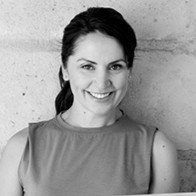
Hi there! I'm Karen, a Talent Agent at Aquent specializing in UX, UI, Product & Digital, and Graphic Design across freelance, permanent, and contract roles. My recruitment journey comes with a unique twist. Before joining Aquent, I spent a fulfilling decade running my own successful outdoor fitness business. Unfortunately, the challenges of Covid led to its closure. However, I chose to pivot my skills into a new avenue — helping creatives find their perfect job fit. My background as an entrepreneur brings a distinct perspective to recruitment. I deeply understand both the aspirations of individuals and the critical need for the right talent to drive business success. When you work In recruitment, every day brings its own set of puzzles to solve and hurdles to overcome, skills I built up during my time as a business owner. With a foundation in Graphic Design, I'm passionate about every facet of the creative and technical process of bringing designs to life. It's incredibly rewarding to spend my days connecting with creatives and assisting them in realising their career aspirations. On a personal note, I'm balancing being a working mum to two little ones aged 3 and 9 months. I'm deep in the juggling act that a working mum brings, but I'm fortunate to have a strong support network both in my professional and personal life. Looking forward to connecting and exploring opportunities together! nging a design to life. I also have the added bonus skill set of running my own business for many years so as a business owner I understand the importance of hiring the right talent and how that can make or break the success of a business.
Latest.

Stop replicating the office: How to lead global creative teams
Thought Leadership, Design, Marketing, Leadership

Jobseekers: How to stand out in today’s competitive job market
Job Seeker


AI is making your people think less. Here’s how the smartest companies are responding.
Technology, Thought Leadership, Leadership