

Key Takeaways
- Success in a tough design market requires a shift from adding more detail to prioritising clarity, outcome-thinking, and a resilient, experimental mindset.
- Hiring managers only scan CVs for 10-15 seconds; your name, title, and portfolio link must do the heavy lifting to ensure you pass the initial test.
- Below, we share a specific formula to use instead of vague summaries to immediately cut through the noise.
- Case studies should focus on your thinking and constraints, not just final screens, to prove you can navigate the real-world complexity of design.
- Treat your job search like a design problem by making small, tracked adjustments to your approach until you start seeing a change in your callback rate.
The design market in Australia is tough right now. Really tough. We’ve been speaking with a lot of designers lately who are talented, experienced, and doing all the right things, but still not getting callbacks. So we have put together a free session to share all the latest stuff we actually tell people when we’re trying to help them get traction. This is the summary.
There’s a lot here. Don’t try to do it all at once. Start where you think you can make the most immediate impact and go from there.
Part 1: Your CV isn't the problem. Clarity is.
One role can attract hundreds of applications. We’ve seen it. When that’s the reality, the instinct is to add more to your CV. More detail. More tools. More experience crammed in. But more isn’t the problem to solve. Clarity is.
Hiring managers aren’t reading your CV. They’re scanning it. You’ve got about 10 to 15 seconds. Here’s what they’re actually looking at, in order:
- Your name, title, and whether there's a portfolio link
- Your most recent (or relevant) role, the company, and the work you did
- A quick scan of your bullet points for recognisable brands or relevant projects
- Your summary, but only if they're still interested by this point
- Your skills and tools section
Your link and most recent (or relevant) role plus its bullet points are doing almost all the heavy lifting. If those aren’t strong, the rest might not even get looked at.
Designers, stop making your summary sound like everyone else's
Here’s the thing about summaries. Most people either skip them, write something vague, or use AI and don’t bother editing it. Then it ends up sounding like this:
“Experienced UX designer with a passion for creating user-centred designs and a proven track record of success.”
That could be literally anyone. It says nothing about who you actually are or what you’re good at. A hiring manager reads that and moves on.
A good summary is two to four sentences. Think of it as your pitch, not your job history. It does one job: tells the hiring manager who you are, what you specialise in, and what you’re looking for next.
The formula: Job title + Sector + Specialisation + What you're looking for next
Same person, rewritten:
“Senior UX Designer with 7 years across fintech and e-commerce. I specialise in complex data-heavy interfaces and have led end-to-end design on products used by over 2 million users. Currently looking for a senior IC or lead role in a product-led company.”
See the difference? You know their level, their industry, what they’re actually good at, and where they want to go next. That’s what makes a hiring manager want to keep reading.
Use bullet points that actually get read
Long lists of responsibilities that look like they’ve been copy-pasted from a job description are not going to cut through today's saturated market. Hiring managers want to know what you did, what changed because of it, and how big the impact was.
The formula: Action verb + What you did + The result or impact
Before: Worked on the design system with the team.
After: Led the consolidation of three legacy component libraries into a single design system, cutting design-to-dev handoff time by 40% and improving cross-team consistency.
No metrics? That’s completely fine. Scope, scale, and speed tell just as strong a story. “The first designer hired at the company built the design practice from scratch”. “Delivered a full rebrand across 200 brand assets in six weeks”. These are just as compelling as a percentage.
Make sure your whole story lines up
When someone likes your CV, the first thing they do is look you up on LinkedIn. If the two don’t match, it creates doubt. Think about it like a brand. You wouldn’t trust a product that looked completely different across every channel. The same applies to you.
Make sure your job titles are consistent, your LinkedIn headline reflects what you want next rather than just your last role, and your portfolio link actually works. And if you’re actively looking, make it easy for people to contact you. Your email should be on your CV, your LinkedIn, and your portfolio.
Quick test: Find someone in your industry, open your CV, and give them 60 seconds. Can they tell what kind of designer you are, what problems you solve, and what impact your work has had? If not, that’s your starting point.
Part 2: Your case studies aren't about showing work. They're about showing your thinking as designers.
There’s a common misconception that more work equals a stronger portfolio. It doesn’t. Hiring managers aren’t looking for volume. They’re trying to understand how you think as a designer. Two or three strong, well-told projects will always beat five average ones where there’s no story behind the screens.

Every case study needs to answer these questions:
- What was the problem, and why did it matter?
- What was your specific role? Not the team's role. Yours.
- What decisions did you make and why?
- What constraints were you working within?
- What was the outcome?
The one most people skip is constraints. Budgets, timelines, stakeholder pushback, and technical limitations. Talking about these doesn’t make your work look worse. It makes it look real. It shows you can navigate complexity, which is exactly what hiring managers want to see.
Show the journey, not just the destination
Final screens are honestly the least interesting part of a case study to a hiring manager. What they want to see is how you got there. Early sketches, even rough ones. A journey map. A decision you made and why you chose it over another option. Something that didn’t work, and what you did when you hit that wall. Research insights that changed the direction of the project.
You don’t need polished artefacts. A photo of a whiteboard or a rough wireframe included in your process makes your thinking tangible. That’s what sets a great case study apart from a pretty gallery of final screens.
Under NDA? You still have options
NDA issues come up constantly for designers, especially for people coming out of enterprise roles or projects that never launched. You’re not stuck.
- Anonymise or simplify: Blur logos, change the industry context, recreate a simplified version. You're illustrating thinking, not reproducing confidential IP.
- Focus on outcomes over visuals: “Reduced onboarding drop-off by 30%” tells a stronger story than a screenshot.
- Walk through your thinking: Describe the problem space, your research, your decisions, and what shipped. Thinking is the key to the case study.
The one section almost no designers include
Add a short reflection at the end of each case study on what you’d do differently and what you learned. It shows self-awareness and maturity, and hiring managers notice it because it’s genuinely rare.
Start here: “The hardest part of this project was…” If you can answer that clearly, you already have the bones of a great case study.
Part 3: Staying motivated when it gets hard.
This is the part Lisa and I probably felt most strongly about. Job hunting after redundancy isn’t just a logistical challenge. It’s an emotional one. Even when you know it wasn’t personal, it still knocks your confidence in ways that are hard to explain. That’s normal, and it’s worth saying out loud.
Rejection is not evidence that you're not good enough as a designer
In a market where a single role can attract 755 applications, most rejections have nothing to do with your ability as a designer. Someone else was a slightly closer match. The hiring manager already had an internal candidate. The role got frozen. The budget changed. You won’t always know why, and that silence is not a verdict on your worth as a designer.
We’ve seen people get a pep talk and go on to land a great role. The designers who kept moving forward were the ones who didn’t let the knock-backs define them. Showing up to each application and each interview like it’s your first, with that same energy, is genuinely the only way through it in this design market.
Treat it like a design problem
Instead of feeling like every application is a test you’re going to pass or fail, treat the whole process like a series of small experiments. Apply, observe what happens, adjust. Change one thing at a time so you know what’s working. Track what you’re sending out and what’s coming back.
If something hasn’t shifted after a few weeks, that’s a signal to change your approach, not to try harder at the same thing. It might be your summary. It might be your bullet points. It might be your case studies. Keep adjusting until you start getting callbacks, then you’ll know you’re heading in the right direction.

Use your network and make it easy for people to help
65% of designers find their next role through their network or a referral, not a job board. Most people who want to help you don’t know how. So make it easy for them and be specific.
“I’m looking for senior UX roles in fintech or SaaS. If you hear of anything or can think of anyone worth me talking to, I’d really appreciate an introduction.”
Tell people it’s okay to tag you in job posts. Give them permission to advocate for you. Most people won’t do it unless you ask.
Stay visible even when it feels pointless
The design community in Australia is smaller than it feels. A thoughtful comment on someone’s post, sharing a small piece of work, and engaging with companies you’d love to work for. None of this takes a lot of energy, but it compounds over time and keeps you in people’s peripheral vision.
When you post an open-to-work update, be specific about what you do, who you help, and what you’re looking for. That specificity is what gets shared and remembered. If it lands in the right hands, it can only help.
And most importantly, designers, look after yourself
Keep some structure to your days, even loose structure. Set a cut-off time so job hunting doesn’t bleed into every hour. Take guilt-free days off to recharge. You are allowed to rest. Talk to other designers and peers who are in the same situation because you are not alone in this. And if the financial pressure is building, consider short-term contract or freelance work to take some of that off the table while you search.
This is a marathon, not a sprint. The designers who got through it didn’t overhaul everything at once. They made small adjustments, stayed visible, leaned on their community, and were kind to themselves when things didn’t move as fast as they wanted.
The right role is out there. Keep going.
Please click below to download the helpful handout from our session.
About the authors
Hi there! I'm Karen, a Talent Agent at Aquent specializing in UX, UI, Product & Digital, and Graphic Design across freelance, permanent, and contract roles. My recruitment journey comes with a unique twist. Before joining Aquent, I spent a fulfilling decade running my own successful outdoor fitness business. Unfortunately, the challenges of Covid led to its closure. However, I chose to pivot my skills into a new avenue — helping creatives find their perfect job fit. My background as an entrepreneur brings a distinct perspective to recruitment. I deeply understand both the aspirations of individuals and the critical need for the right talent to drive business success. When you work In recruitment, every day brings its own set of puzzles to solve and hurdles to overcome, skills I built up during my time as a business owner. With a foundation in Graphic Design, I'm passionate about every facet of the creative and technical process of bringing designs to life. It's incredibly rewarding to spend my days connecting with creatives and assisting them in realising their career aspirations. On a personal note, I'm balancing being a working mum to two little ones aged 3 and 9 months. I'm deep in the juggling act that a working mum brings, but I'm fortunate to have a strong support network both in my professional and personal life. Looking forward to connecting and exploring opportunities together! nging a design to life. I also have the added bonus skill set of running my own business for many years so as a business owner I understand the importance of hiring the right talent and how that can make or break the success of a business.
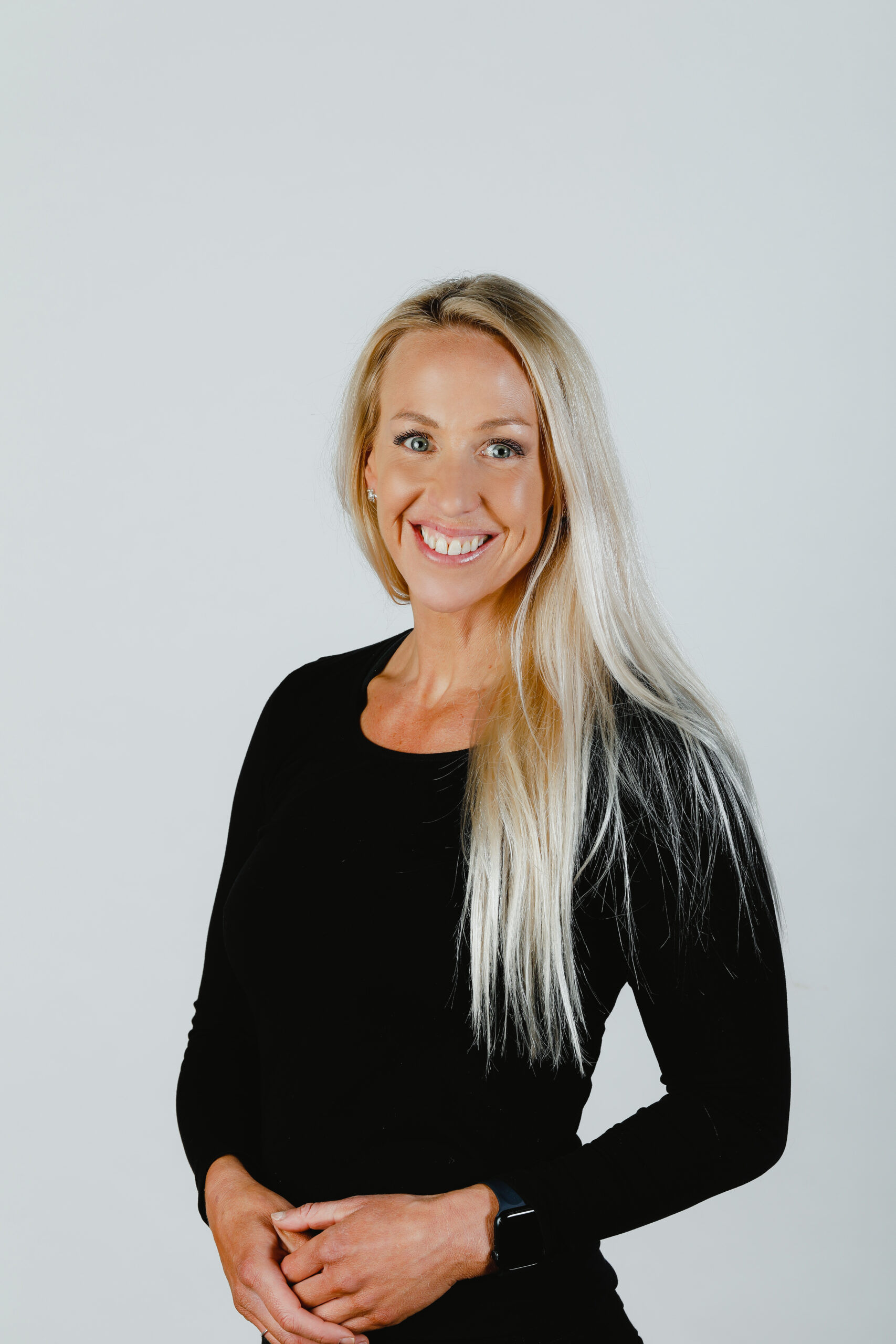
Hello, I'm Lisa! I'm a talent agent here at Aquent, specialising in freelance, contract and permanent creative recruitment. This includes but is not limited to areas such as UX/UI and Product design, Digital & Visual Design, Graphic Design and Finished Art, at all levels. I'm looking to connect with designers across digital, print, user interface and within the HCD space, to expand my connections and get to know the wonderful talent in this community. I bring experience from co-owning a business in the advertising industry, paired with my drive and passion for helping people as a Lifeline counsellor, to this realm to help creative talent find work they love and clients find the best match for their specific needs. I love working closely with my clients and talent to build successful outcomes. I would describe myself as approachable, creative and driven. What drives me is leading by example to imprint a legacy of kindness and empowerment.
Latest.

Improve your hiring process to stop missing out on great talent
Hiring Insights


AI orchestration: The new operating model for Australian teams
Technology, Hiring Insights, Thought Leadership, Industry Trends

Being a great designer isn’t enough to get hired—you need to prove your impact
Job Seeker, Design